
Energy Sector: Lithuania Could Become an Attractive Location for Large Electricity Consumers
Lithuania is rapidly expanding its renewable energy capacity and is approaching the point where it will be able to produce as much electricity as it consumes. Last year alone, wind energy met one-third (33%) of the country’s total electricity demand. According to this indicator, Lithuania shares second place in the European Union (EU) with Ireland and significantly exceeds the EU average (19%). As capacity grows, a new question arises: will the energy system be able to adapt to this pace, and will there be enough electricity consumers? These challenges were discussed at the annual Lithuanian Wind Power Association (LVEA) conference “WIND Vision.”
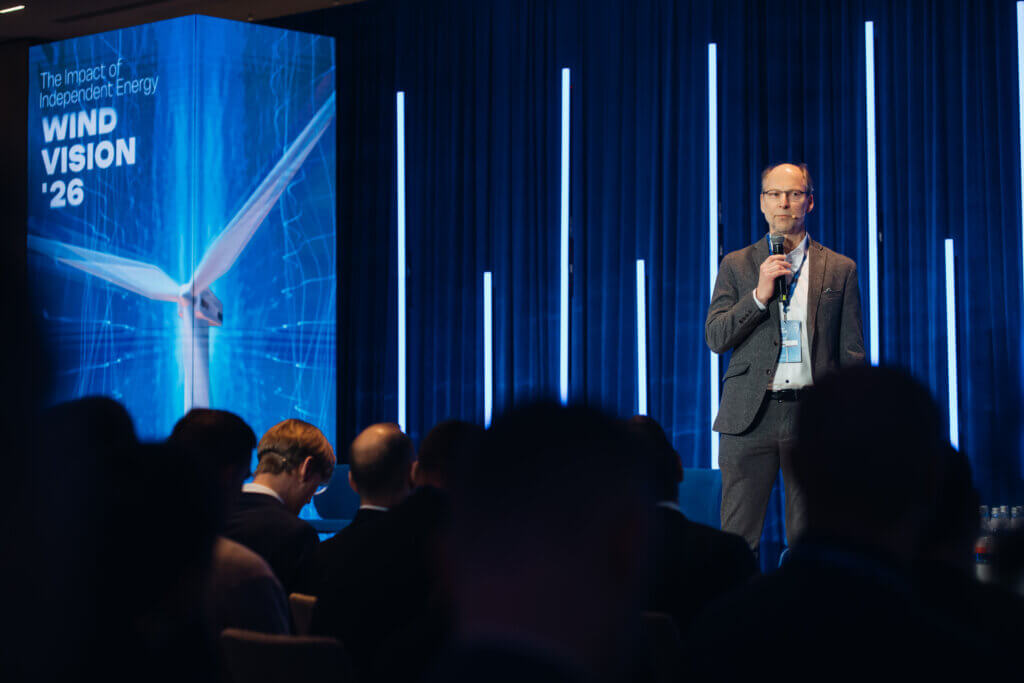
The conference held in Vilnius brought together representatives from the energy sector, business, and politics, as well as international wind energy companies, including Nordex Group, Enercon, Enefit Green, and Nordbalance.
“Last year was exceptional for Lithuania in the energy sector – we synchronized our electricity system with the continental European networks, reached the lowest level of energy imports since the closure of the Ignalina Nuclear Power Plant, and generated a record amount of electricity from renewable sources. However, this is not the end of the road – by 2028 we must ensure that Lithuania produces as much electricity as it consumes,” said Ramūnas Dilba, a Presidential Office representative for infrastructure issues, during the conference.
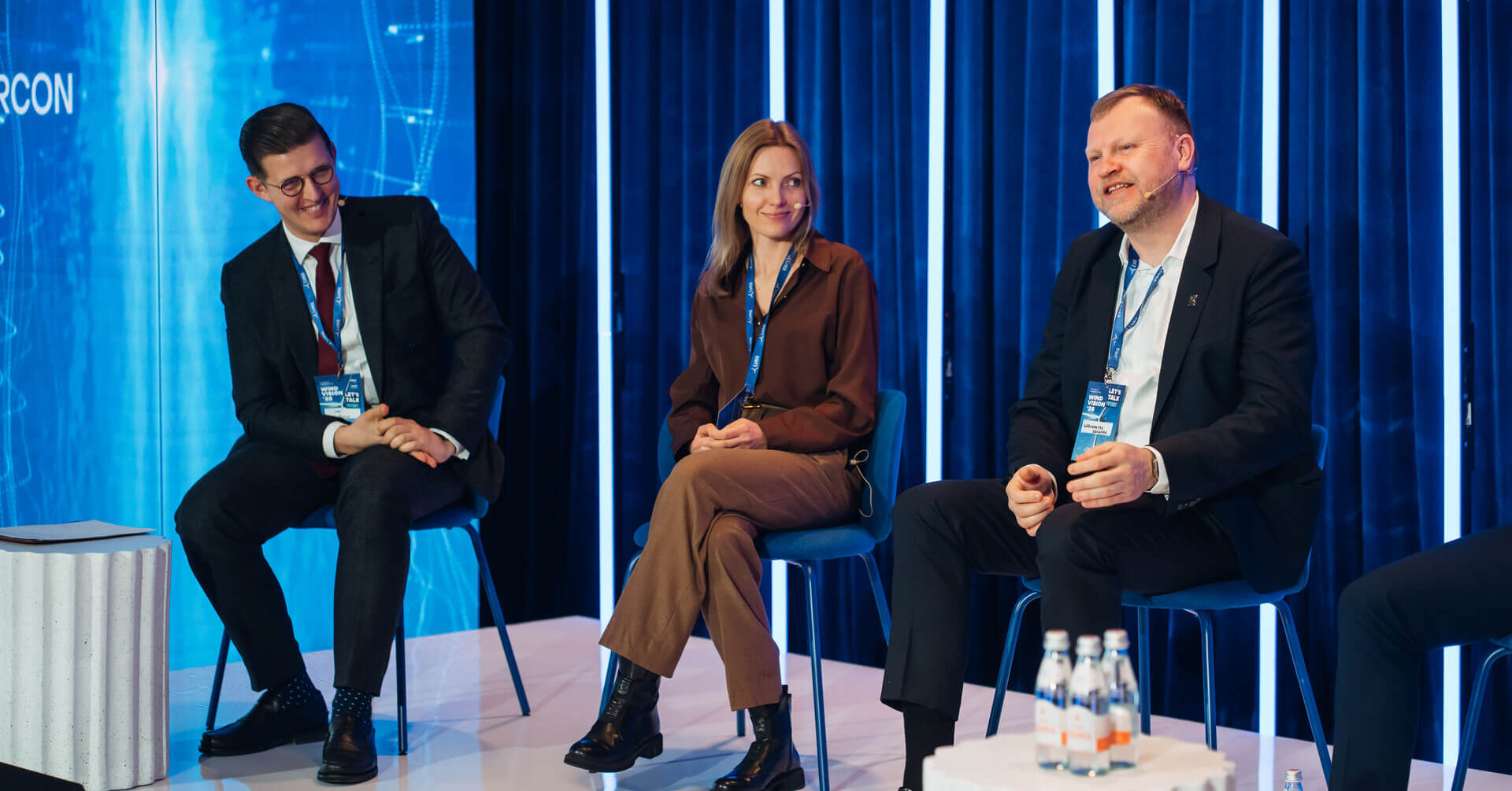
One of the panel discussions at the conference focused on the concrete decisions that could shape the development of Lithuania’s energy system in the coming years.
“When discussing Lithuania’s energy architecture up to 2030, we must understand that this is not a single solution or the responsibility of one institution. It is a puzzle that must be assembled by everyone- from policymakers to infrastructure operators and investors,” said Arnoldas Pikžirnis, Deputy Director of LVEA and moderator of the discussion “Energy Architecture: Where Is the State Heading?”
Interconnections and grids becoming a critical factor
Vice Minister of Energy Airidas Daukšas emphasized during the event that the security and development of the energy system are inseparable from strengthening infrastructure.
“After synchronization, our system essentially relies on one main interconnection – LitPol Link. We cannot depend on a single infrastructure asset and one interconnection if we had to operate in isolated (‘island’) mode,” he said.
According to the vice minister, an additional interconnection with Poland – Harmony Link – is important not only for energy security but also for the expansion of renewable energy.
“When we calculate the system’s capabilities together with the transmission system operator, we see that additional export capacity through interconnections increases the potential of renewable energy sources,” Daukšas stated.
Ignas Junevičius, Head of the Renewable Energy Sources Center at the electricity transmission system operator Litgrid, added that Lithuania currently has a relatively good situation in terms of grid capacity compared with many other European countries.
“We have built a very strong foundation and achieved a very high pace on the generation development side. To ensure this pace does not slow down, we need to think about consumption. I would emphasize flexible consumption – it would allow us to ensure maximum benefits for producers, consumers, and the entire system,” Junevičius said.
According to him, one of the most important elements of system flexibility in the coming years will be energy storage technologies.
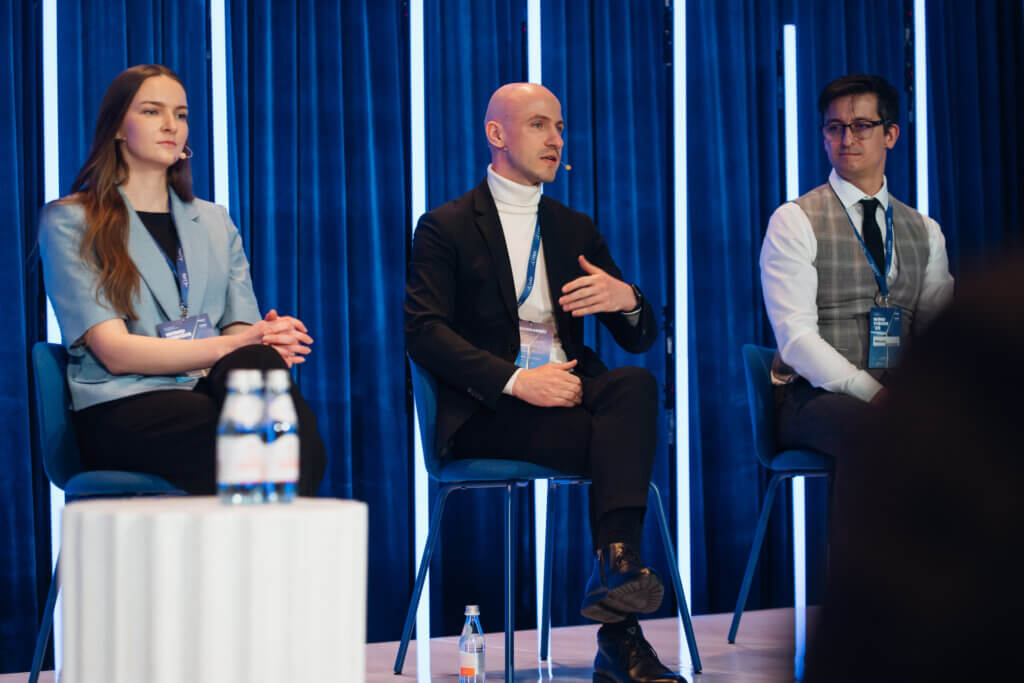
“We expect that this year we will have around 1 gigawatt (GW) of batteries, and at least 2 GW next year. That is roughly Lithuania’s instantaneous electricity consumption and will give the system much more flexibility,” Junevičius noted.
The biggest challenge: electricity consumption
As electricity production grows, increasing consumption becomes increasingly important. Ieva Kiškytė, an expert in data centers and green economy industries at the investment promotion agency Invest Lithuania, said it is important for Lithuania to attract large electricity consumers.
“We often talk about producing a lot of electricity, but the question is – who will be the major consumer? Our job is to find investors who need hundreds of megawatts of capacity – whether data centers or green hydrogen projects. It is also important to consider that in recent years the logic of data centers has been changing. Previously they needed to be close to customers, but now, due to the development of artificial intelligence, what matters most is electricity and speed. In this respect Lithuania has an opportunity to compete,” Kiškytė said.
Paulius Butkus, Head of Strategy at the new energy group EPSO-G, emphasized that Lithuania still has significant electrification potential.
“We pay a lot of attention to attracting new electricity consumers, but electricity still accounts for only a small share of total energy consumption in Lithuania – about 13 TWh out of roughly 90 TWh. This shows significant electrification potential. Electricity consumption could grow through electrifying transport, heating systems, and industry, so it is important to look at the energy system as a unified whole. This requires revising the rules of electricity, heat, and other markets and creating conditions for greater system flexibility,” he said.
A new wave of investment: data centers and hydrogen
The topic of large electricity consumers was continued by Eglė Mėlinskė, Director of data center developer Sentris. According to her, such projects require enormous investments, so competition between countries to attract them is extremely strong.
“For one megawatt of data center infrastructure you need around €10 million in investment. That means a 100 MW project requires about €1 billion just for infrastructure, while artificial intelligence IT equipment costs several times more. Therefore, the decision about where to build such a center is very serious, and investors evaluate not only electricity availability or speed but also how prepared the state is to be in the same boat with the investor. Economic benefits must outweigh geopolitical risk,” she said.
According to Mėlinskė, the “window” for attracting data center investments may be relatively short.
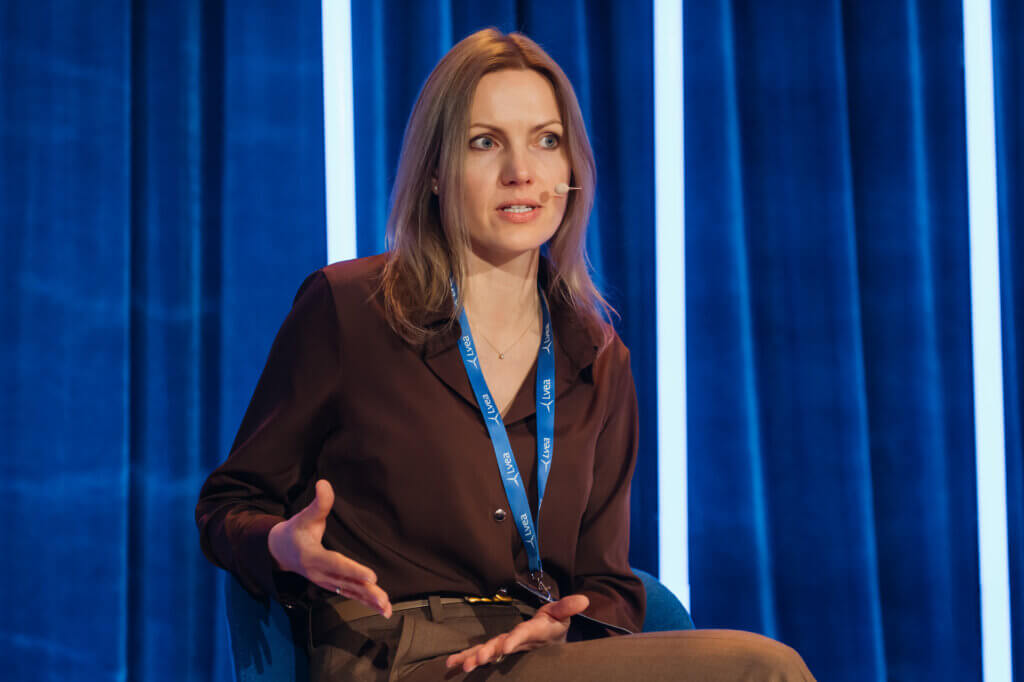
“Artificial intelligence is currently growing rapidly, and Scandinavia is a great example, but the market may soon become saturated, so it is important to catch that train,” she said.
Meanwhile, Gerimantas Bakanas, head of Gijos, emphasized that cities can become an active part of the energy system and use surplus energy more efficiently. As an example, he mentioned a planned green hydrogen project in Vilnius that would be integrated into the city’s infrastructure.
“Why are we planning a hydrogen plant in Vilnius itself, right in the city? Because consumption is immediately available here – public transport. In addition, hydrogen production generates waste heat that we can use in district heating networks. We are not yet using the city’s energy ecosystem to its full potential,” Bakanas said.
According to him, the same logic can be applied to data centers, which generate large amounts of heat and could become an additional heat source for cities.
“In cities we have the opportunity to use energy that elsewhere would simply be released into the air. Currently we have an agreement with LRTC – the heat from their data center will be integrated into the city’s district heating network. One megawatt may not seem like much, but ‘megawatt by megawatt’ already makes a difference. We are now negotiating with two more data centers in Vilnius so that their waste heat heats residents’ homes instead of the air,” he said.
Can geopolitics hinder investment?
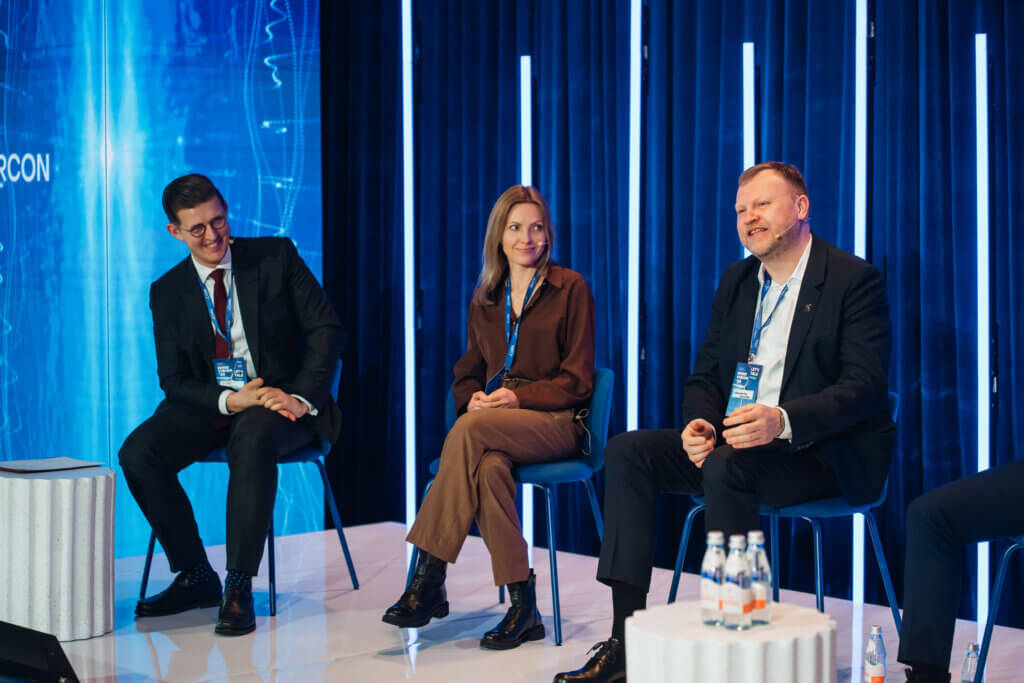
The discussion also touched on a common argument heard in public discourse – whether the geopolitical situation in the region could hinder investment in energy. Security expert and reserve major Darius Antanaitis said this argument should be evaluated critically.
“If we look at geopolitics more broadly, Lithuania is certainly not the most risky place for investment. Finland has a border of more than a thousand kilometers with Russia, yet investments still come there. Norway is strategically important because of its energy resources – if someone wanted to control energy resources in the region, it would be a much more important target. There are more examples in the world – Israel constantly experiences military action, Taiwan lives under the shadow of a possible conflict with China, yet investments still come there. Therefore, the security argument is often not the main reason for investors,” Antanaitis said.
According to him, the protection of energy infrastructure should also be assessed realistically.
“You cannot place a soldier next to every wind turbine. We have intelligence and security mechanisms – resources must be used rationally. If indicators appear that something might happen, then concrete actions are taken.”
International industry: Lithuania’s pace stands out
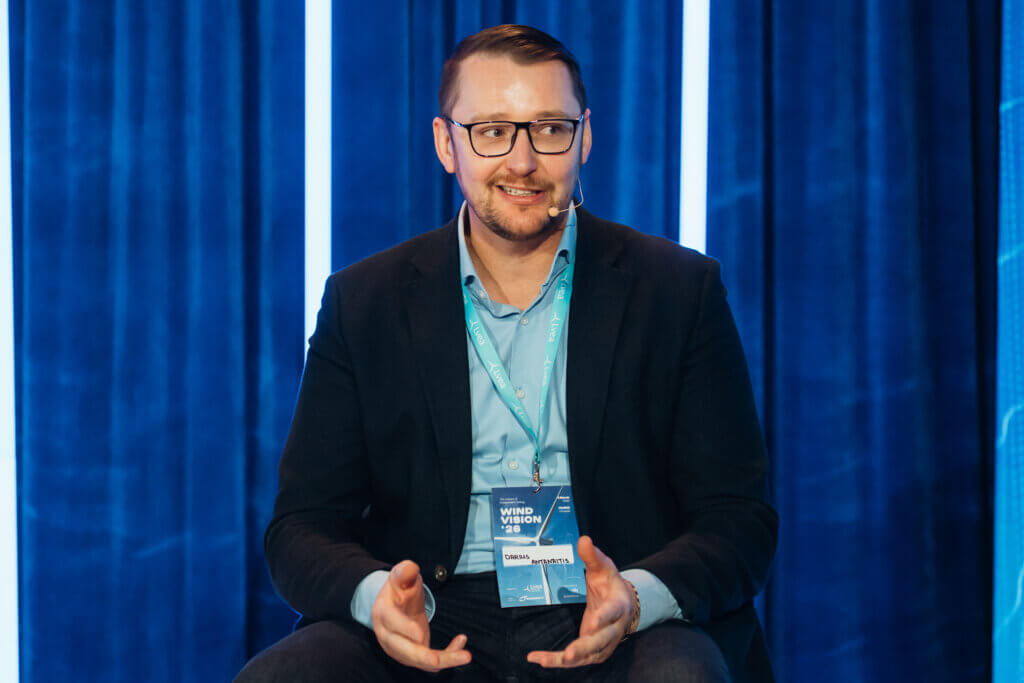
Norbert Dwenger, a representative of the international wind energy company Nordex Group who participated in the Wind Vision conference, said Lithuania has made significant progress in recent years in developing renewable energy and creating a favorable environment for investors.
“I have not seen another country where two, three, or even four ministries participate in such conferences in the same room and truly demonstrate the pace of cooperation. This sends a very clear signal to investors that the state has a common direction and is ready to work together with the industry,” he said.
According to Dwenger, technological progress allows wind energy to be used more efficiently, and onshore wind today remains one of the most competitive electricity generation technologies.
“The latest analyses show that onshore wind is now one of the cheapest forms of energy alongside solar power. Therefore, it can become an important part of Lithuania’s energy independence and help ensure competitive energy prices in the future,” he said.